Sunday, September 10, 2006

Driving Me Crazy

I had a funny experience the other day at work. I had decided to leave my rather stifling cubicle confines and drive to a nearby town to deal with a report concerning misbehaving traffic signals. It was close enough to quitting time that I wouldn't be able to do much when I got there, but it beat sitting at my desk trying to keep my eyes open. So, I hopped in my blue Dodge pickup (the only blue Dodge pickup the State of Illinois seems to own) and I took off down 7th Street toward my destination.

7th Street in Dixon is a very hilly street - especially between my place of employment (the Illinois Department of Transportation) and IL Route 26. Heading away from my office, the road drops considerably into a deep vally and then rises even higher to a peak where sits a Catholic church and a small park.

Anyway, as I was descending into the valley, there was a mini-van in front of me. I'd paid little attention to it, until it's left turn signal started blinking. Normally, when things like this happen, the average driver makes decisions almost subconsciously. You don't really think about what's happening, you just respond because experience has taught you what most drivers will do when they turn on their left turn signals. So I didn't think much about her blinking signal, except, "Where's she going to turn?" There didn't look like a good place for her to make a left turn any time soon, judging by the rate she was slowing down.

Then she did something that caught me by surprise. With her left turn signal still engaged, she swerved to the right and pulled up next to the curb.

"Ok," I thought, "She's getting out of the way of traffic, so I'll just zip past her."

I had no more than laid my foot on the accelerator to speed past her mini-van when she very suddenly pulled directly into my path. Naturally, I hit the brakes. It was close, but I managed to avoid a collision, but not without getting her attention. She then completed her u-turn in front of me, parked her car on the opposite side of the street next to her apartment and leaned out the window to yell at me, "Hey! Didn't you see my turn signal?"

I moved on, not wanting to spark a confrontation. By the time I got to the top of the hill, I was mad. I'd realized that if I were a cop, she'd have had a ticket in hand by now. By the time I got to the signals at Route 26, I'd chewed her out three times in my head, each time telling her that first, what she did was completely illegal, turn signal or not, and second, the next time she decides to do something like that, to pull over and let the traffic go by so no one sees her doing it, much less gets in a wreck with her. And I was still chewing her out as I left Dixon's city limits.

There's a certain sweetness about the bitterness we can bear toward someone who's wronged us. It's almost delectable, being furious at someone who has so clearly wronged you and deserves to be punished for it. Yet that same sweetness that captivates our minds, indulges our emotions, can easily ruin a moment, a day, a week, or even a lifetime. Anger itself is not necessarily a bad thing, but when we fall in love with our anger, it's bound to end up hurting us. I realized as I drove farther down the road that I was becoming infatuated with this sense of having been wronged. In short, I was letting her crazy driving drive me crazy!

One of my favorite artists is Don Chaffer of Waterdeep. A couple years ago he put out an album entitled Whole 'Nother Deal which ranks among the greatest albums I've ever owned - secular or Christian. The third track on this album is a song entitled "On Our Way To Crazy" wherein Chaffer intones the refrain:

"Once we love those things that hurt us, we're on our way to crazy..."

In Deuteronomy 32:35, God states simply, "Vengeance is mine, I will repay". This verse popped into my head and it prompted me to give the whole thing over to God in a quick prayer. I prayed for my attitude and finally let go of the issue.

Yet there remained one problem: no matter how I felt toward this nameless woman, she'd done something wrong. It wasn't simply wrong, it was stupid and dangerous. Her response to me after the incident showed me that she didn't think she'd done anything wrong - which means she'd be likely to do it again.

It seems to me that we often confuse forgiveness with the denial of justice. Many people presume that to forgive someone of their wrong is to deny the service of justice in that case. Rather, the purpose of forgiveness is to ensure that a skewed justice is not being enforced: that the punishment fits the crime and is not skewed or biased by the personal feelings of those wronged. It gets at a central idea that a lot of Christians overlook: Our emotions are secondary to our will and our will is to be held subject to God's will.

In this case, I had cleared myself of any possible ill feelings I may have had at this woman who wronged me. The issue was no longer whether or not I had been wronged, but whether this woman posed a danger to other drivers. Something had to be done about that. As a result of that conviction, I didn't hesitate to get her license plate number as I drove past her minivan parked alongside the road on my way back to the office.

Once I got back to my desk, I called the local police station and reported the incident. The officer on the other end thanked me and said, "We'll go yell at her." Later, I was thinking about that comment. He acted as though I wanted them to "yell" at her. It seems he presumed that I was irate over this situation, just seething and fuming over what had happened, desperate to sick the cops on her and get back at her.

And at one point, I was.

- Graffy

Wednesday, September 06, 2006

Is The New Testament Reliable?

www.reverendfun.com

Call it Apologetics Wednesday, but I thought perhaps I'd briefly treat questions of the accuracy of the Bible (here, the New Testament).

1. How can we know that the original books of the New Testament were anything like what we have in our Bibles today?

When examining the authenticity of an ancient text, it's rare that the original texts still exist. Thus, historians rely on more indirect methods of establishing authenticity, like how many copies of the text exist, and how close the earliest copy is to the original writing.

Compare to two texts of antiquity, Homer's Iliad and the Bible:

Iliad - 643 existing copies; 900 years from original.
Bible - 24,970 existing copies (5,000 of the New Testament); 200 years from original.

In reality, few ancient manuscripts are as well-documented as even the Iliad. Many have only a handful of copies existing (5 to 10) and the earliest copies are dated 1,300 years or more after the original writings.

2. What about the "other" gospels?

There's some 80 or more supposed "gospels" that exist apart from the four in the New Testament. History shows us that Christians in the early centuries of the church believed a wide variety of doctrines that are rejected today by most Christian denominations.

It's important to remember first that the other gospels have late dates - 100 years or more after Christ. Comparatively, most Biblical scholars agree the original New Testament books were written within 65 years after Christ's resurrection.

Also, a majority of those gospels belie a "Gnostic" doctrine. Gnosticism was the chief heresy the early church battled against. As early as 110 A.D., we have church fathers quoting from the synoptic gospels (Matthew, Mark, and Luke), as well as some of Paul's letters and the book of Hebrews. These quotations indicate they considered those books to be Scripture. These books contain the foundations for the vast majority of Christian doctrinal beliefs, especially Christ's purpose, divinity and resurrection.

3. What about "disputed readings" of the New Testament?

There are parts of the New Testament (esp. the gospels) where the original text is not certain. Evidence of later "editing" has brought into question the original text - what it said or whether it was ever there. A couple points to remember:

i. A disputed reading usually consists of two potential renderings

ii. In no case do disputed or missing readings affect any significant Christian doctrine.


4. What about contradictions?

Contradictions typically arise from misinterpretation. Below is a list of 15 basic principles to consider when interpreting the Biblical text:

1. The unexplained is not necessarily unexplainable

2. Fallible interpretations do not mean fallible revelation

3. Understand the context of the passage

4. Interpret difficult passages in light of clear ones

5. Don't base teaching on obscure passages

6. The Bible is a human book with human characteristics

7. Just becase a report is incomplete does not mean it is false

8. New Testament citations of the Old Testament need not always be exact

9. The Bible does not necessarily approve of all it records

10. The Bible uses non-technical, everyday language

11. The Bible may use round numbers as well as exact numbers

12. Note when the Bible uses different literary devices

13. An error in a copy does not equate to an error in the original

14. General statements don't necessarily mean universal promises

15. Later revelation supercedes previous revelation


There's much more. Most of what I have stated here can be found in Josh McDowell's book, The New Evidence That Demands a Verdict

- Graffy

Saturday, September 02, 2006

Romans 12:1,2 Review Notes

I have recently posted two studies of Romans 12:1 & 2. The first is Celebrity Spirituality and the second is The Pig of God?. Technically, this would be the third part of a three-part series, but for the sake of time, I've simply opted to post a semi-outline of both verses here. Anyway, we begin with our key text:

Therefore, I urge you, brothers, in view of God's mercy, to offer your bodies as living sacrifices, holy and pleasing to God—this is your spiritual act of worship. Do not conform any longer to the pattern of this world, but be transformed by the renewing of your mind. Then you will be able to test and approve what God's will is—his good, pleasing and perfect will.

The verses break simply into three parts: verse 1, verse 2a, and verse 2b.

Offer your bodies as living sacrifices (v. 1)

1. Sacrifice is "holy"

2. Sacrifice pleases God

3. Sacrifice is a "logical service" (in the original Greek).

4. Sacrifice costs us in various ways (financially, emotionally, physically)

Do not conform to the pattern of this world (v. 2a)

1. Conform - in Greek, to "unite one's appearance"

2. "Pattern of this world" - in Greek, an "age" or time chacterized by popular ideas / beliefs.

3. Literally means, "Do not join your appearance to the popular trends of the day" (Think Bill Clinton or Oprah Winfrey, here)

Be transformed by the renewing of your mind (v. 2a)

1. Transform - in Greek, "metamorphoo" or "change form"

2. Renewing - in Greek, implies a sense of freshness as opposed to youthfulness.

3. Literally means, "See yourself changed by the continual freshness of your mind"

Paul is describing the process of sanctification (not the event). The "change in form" is to mirror the Godly inner nature the Christian already posesses. The "freshness" of mind is the conviction of the Holy Spirit / God's Word.

Test and approve God's will (v. 2b)

1. "Test and approve" ("prove") - in Greek, means to test with the expectation of passing.

2. God's Will - God's desire (not God's sovereign will). God's desire is:
i. That you be sanctified (see v. 2a and 1 Thess. 4:3)

ii. Good - in Greek, "good by nature" (intrinsic goodness) not "good in appearance"

iii. Pleasing - "fully agreeable" (to God)

iv. Perfect - "Complete" - it's all a Christian needs for spiritual and mental well-being.

Sunday, August 27, 2006

Darwin the Plagarist?

I was scouting some of my favorite haunts. I found this article on William Dembski's blog, Uncommon Descent.

The author claims Darwin plagarized the previous work of a scientist (a Creationist, of all things) who figured out what natural selection was and how it worked a couple decades before Darwin did.

Whether or not Darwin plagarized, I was fascinated to discover that the darling of evolution has it's roots in Creation science. But then so does calculus, basic astronomy, and the scientific method (to name a few).

Be forewarned, it's a brainy article.


- Graffy

Saturday, August 26, 2006

The Pig of God?

www.reverendfun.com

Did you know when Wycliffe Bible Translators translated the New Testament for a tribe in Borneo, Jesus was referred to as "the pig of God" in John 1:29, rather than "the lamb of God"?

More on Wycliffe's interesting translation later...

Read Romans 12:1:

Therefore, I urge you, brothers, in view of God's mercy, to offer your bodies as living sacrifices, holy and pleasing to God—this is your spiritual act of worship.


Paul gives the command to "offer your bodies as living sacrifices." He describes the living sacrifice as "holy and pleasing to God" (it's something God really wants us to do) and finally points out that "this is your spiritual act of worship".

The NIV translation is actually misleading on the last part. In this case, the King James gets closer to the truth by rendering it, "this is your reasonable service." In the Greek, Paul says it is "your logical service."

In other words, Paul is saying that not only does offering our bodies as living sacrifices please God, it's also a no-brainer. It's a head-smacking, "does-the-word-'duh'-mean-anything-to-you?" idea: if you're a Christian, you are a living sacrifice to God.

But what does it mean to be a sacrifice?

In the Greek, "sacrifice" literally means a thing or person burned by fire as an offering to a god or to God. The idea is simple enough as it is presented, but I'd like to give it a bit more depth. Hal Lindsey wrote this article on the significance of one kind of sacrifice in Jewish culture, the paschal lamb.

This lamb was offered by a Jewish family to atone for sins. The lamb itself was to be without blemish and one from the family's own flock (not purchased or given to them). The process of choosing the lamb began with selecting several lambs that looked to be perfect, and then setting them apart and watching them for a time to spot deficiencies. Once the proper lamb was selected, the family would take it into their house and would care for it as if it were a family pet, so as to prevent anything from happening that might disqualify it as a sacrifice. Of course, in a household with small children, it's easy to see how a lamb like that would become dear to the family - the children especially. Nevertheless, the day would come when they would have to kill it to atone for their sins.

When that day came, the entire family would go to the temple with the lamb in tow. Then, the father of the house would take the lamb to the altar and the priest would examine the lamb, approve it for sacrifice, and hand the father the sacrifical knife. The father would have to kill the lamb since it was a sacrifice for he and his family's sins. He sacrificed the lamb first by rendering it unconscious by compressing two veins in it's neck. Then he would nip those veins with the knife, and bathe his hands in the outpouring of blood. The carcass would then be burned completely. Often, parts of the sacrifices were given to the priests for their food, but not in the case of the paschal lamb.

The lamb was a perfect, but difficult sacrifice - it meant giving up something that was dear to and prized by the entire family. It came at considerable cost and was a vivid way to remind the Israelites just how serious sin was to God. Yet that cost pales in comparison to the price God paid to remove the sins of those who believe in His Son. This is why John the Baptist referred to Jesus as the "lamb of God who takes away the sin of the world" in John 1:29.

So why did Wycliffe's Bible translators refer to Jesus as the "pig of God" in it's effort to reach a culture?

Quite simply, the native population Wycliffe was trying to reach had never seen sheep, so the "lamb of God" would mean nothing to them. In order to communicate the meaning and purpose of this sacrifice image, they had to use the animal that best fit the Jewish image of the lamb - in this case, the pig. Not surprisngly, this has stood as a rather controversial translation. Nevertheless, it was deemed appropriate for the cultural context.

So how does the concept of a "living sacrifice" apply to the Christian life?

During the course of the last week, I did something I never thought I'd do - I fasted. Fasting is something I always assigned to people whom I believed were more "spiritual" than me. Nevertheless, I was hit with the conviction last Monday that this is something I ought to do. So, I tried it. I went two days without solid food and drank mostly water. On two occasions I had 100% fruit juice to allieviate some light-headedness. Then, after almost 60 hours, I broke my fast. I suppose I had my first true "breakfast" ever last Friday morning!

I can't say that I had some sort of "mountain-top" experience as a result of my fast, but I do feel as though I was closer to God for it. Times I would have spent eating and doing other things to entertain myself were spent in Scripture or in prayer. My hunger pangs reminded me of why I was fasting (to seek God and to draw near to Him) so I used them as opportunities to do just that. As a result, I can see why it is a valued practice among so many even today. While I don't believe fasting is any sort of spiritual "cure-all" for what ails us, some use fasting for a variety of purposes, like these guys from XXXChurch who are doing a 40-day fast as a "movement" to mobilize the church.

While I believe the primary (certainly, the most noble) purpose of fasting in a Christian context is to draw near to God, another benefit was how it reminded me of the consuming nature of pleasure. Case in point, going two days without solid food made the can of Pringles sitting on our kitchen table look like a T-Bone steak to me. I never wanted a potato chip so badly in my life! The experience clearly demonstrated how lust can completely dominate my mind if I permit it.

Ultimately, it has served as a great way of demonstrating just how much of a sacrifice it is to offer our bodies to God as living sacrifices. It is neither convenient nor cheap to sacrifice to God the things we love the most in this life. Yet I believe there is nothing that pleases God more than what we willingly sacrifice out of gratitude and love (not obligation and fear) and it is a natural and inevitable result of being a Christian.

Just some food for thought. :)

- Graffy

Saturday, August 19, 2006

David the Drifter

One evening about two years ago my wife (then, my fiance) and I were enjoying a movie at my house. Our movie was interrupted by the doorbell, rung by my next door neighbor. He'd just stopped by to let us know that he and his family were going on vacation for the next two weeks and could I pretty please watch the house for him? I agreed and then he added:

"Ummm... I don't know if you noticed, but there's this guy that's sitting at the corner of the intersection. He doesn't look dangerous, but I think he's a homeless guy. Just so you know." and with that he thanked me and left.

I relayed the information to Nikki and then we both peeked out a window to see what we could see. Sure enough, there was a silhoutte of a man sitting under the streetlight near a fire hydrant at the intersection. We watched him for a while as he sat there and did absolutely nothing. Then we finished watching our movie. Shortly there after, Nikki went home.

As soon as she left, I peered out the window again at the homeless guy inhabiting the southeast corner of the intersection near my house. I watched him for a while not sure what to think and wondering what I should do. Finally, a sense of cowardice came over me and I chastised myself for peeking out my window at a homeless guy, as if he's some sort of social unmentionable (which was probably what several others on my street were doing or had already done). Rebuked my my own conscience, I did what seemed the logical thing: I went out and spoke to the guy.

It was really kind of funny... and sad. When I approached him, I said the only thing I could think to say:

"Ya know, I don't really have much I can offer, but if you'd like some ramen noodles or something, I'd be happy to give ya something to eat."

Perhaps you've never done something like this before. Maybe you've done it several times. In either case, I don't blame you if you're chuckling at me. Anyway, he didn't hear a word I'd said because he was dead asleep, though he slept sitting up (which led me to presume he was awake). When he didn't respond and I realized he was unconscious, I took the opportunity to look at him in the glow of the street light. He was an older man with leathery and darkly-tanned skin that looked as though it was going to drip off his bones. He had a sleeping bag and an overstuffed backpack at his side that he reclined against. He looked like, well, a homeless guy.

Anyway, I cleared my throat. He woke up and I repeated my offer. He gruffly replied, "No. I got this from Pizza Hut," as he gestured to a foil-wrapped package. He went on, "but I probably won't eat it cuz I bet it's poisoned. They've done that to me before."

I said, "Oh," and sat down on the grass between him and the fire hydrant. I asked him a couple of questions and he proceeded to regale me with his life's story. Few of the details stick in my memory, but I do remember the general course his life took. He told the story backwards. He talked about the things he'd done in the last few decades, back to the battles he'd been involved in during World War II. But that was nothing compared to what he'd done in the first World War. At this point, I had a sneaking suspicion that life on the streets had taken a toll on his mind. My suspicions were confirmed when he went on to describe things he'd done back in the 1870's. Near the end of our conversation (which had taken some 40 minutes) he had worked back to the life and times of Jesus Christ, describing Jesus' disciples as hypocrites and anti-Christs because they wrote things into the Bible that Jesus never said (he knew because he was one of the disciples himself.) Between you me and the fire hydrant, you might say I gained some insights into the homeless I'd never considered before.

Don't get me wrong, I don't mean to laugh at this situation, funny as some of it turned out to be. In reality, I sat and listened to him talk because I really had no idea what to say. I thought about the fact that at one time in his life, he must have been as sane and normal as anyone else, but life as a drifter had taken it's toll on him. I prayed for him as he told me about the life he'd created in his mind. I wish I could have done something about it, but what?

Anyway, I have omitted one element in this tale thus far: the police officer who wouldn't go away. Early in the homeless man's recounting of his colorful past, a police officer in a patrol car had pulled up to the curb to see if everything was all right. I waved him on but he kept checking back every twenty minutes or so. On his third visit, he finally stopped, got out, and said,

"David, you have to move on. We've had several complaints. People don't want you sleeping here tonight."

David replied, "Well, where am I gonna go?"

The officer said, "Just go down by the Abraham Lincoln cabin along the riverfront. You can sleep there tonight."

David looked at the cop and grumbled, "You know those gangsters are just going to bother me again."

The officer replied, "They're on the north side, David. You're on the south. They won't bother you."

David leaned over and picked up his belongings, insisting all the while that they would. Then he headed west toward the small park that was home to a memorial to Abraham Lincoln, still talking to himself.

As soon as David was out of ear shot, I looked at the cop and asked, "So where did he come from?"

I was told that David migrated from the county to the north - he'd been picked up there for loitering and being a nuisance. He got a night in jail and they sent him on his way, ending up in Dixon eventually. I asked the cop if Dixon offered anything for people in his situation. He shrugged his shoulders and said, "Nope. We have to keep pushing them around town until they decide to leave or get arrested." It seemed like a frustrating thing to have to deal with, and the cop communicated as much in his response to me. I finally bade the officer a good night, crossed the street to my house and went to bed.

I saw David a few more times that week - once on my way to work (I stopped and spoke to him briefly) and then at a convenience store where he seemed to just stand around inside and watch the TV on the wall. Eventually, I heard a report that he'd been arrested for loitering in a business in Dixon and refusing to leave. After that, I neither saw him or heard of him again.

Since then, I've wondered from time to time just how significant homelessness is in Dixon. Honestly, the issue of poverty and homelessness in my community is something that's been in the back of my mind since I met David, though I've no clear idea on what to do about it. However, I do stand ready to support someone who does have a vision of what to do about it, as long as it doesn't amount to staring out our windows at them and calling the police...

- Graffy

Wednesday, August 16, 2006

Celebrity Spirituality

Pardon the goofed fonts. Blogger's HTML editor, it seems, leaves much to be desired. I might have to start writing these things off-line....

Anyway, this was a fun one. My wife had the idea of using pictures of popular celebrites and then finding quotes they made about their spiritual beliefs. It made for intriguing research. Anyway, all of the quotes (except the one from Tom Hanks) I found in the book What Hollywood Believes by Ray Comfort. It's a fascinating read. Anyway, on to our celebrity montage...

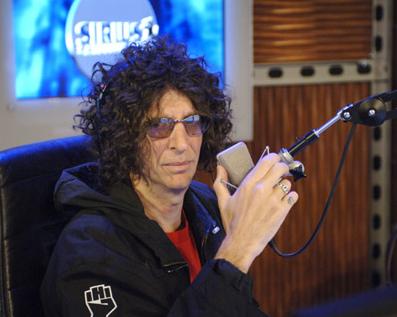
Howard Stern

"I don’t think there’s any difference between the pope wearing a large hat and parading around with a smoking purse and an African painting his face white and praying to a rock"


Britney Spears

“If you can’t have fun, why do what you’re doing? [But] my priorities have changed a little bit, too. My family, my God, and my boyfriend: That’s my life. … I don’t want to be scared. I can’t walk on pins and needles. So I just have to pray. I just have to pray every night.”


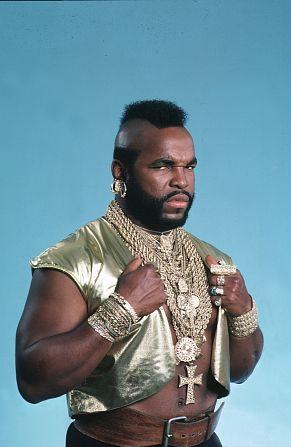
Mr. T

"[My father] was praying. He was getting the sermon ready for Sunday. He wasn’t beating my mother or drinking, he was praying. And that’s something special. He taught me to pray. He taught me to have faith…”


Jim Carrey


“We’ve always tried to humanize him in some way. He’s probably just a shaft of light in a doorway or something like that…”


Johnny Cash


"How well I have learned that there is no fence to sit on between heaven and hell. There is a deep, wide gulf, a chasm, and in that chasm is no place for any man."


Bono

“I often wonder if religion is the enemy of God. It’s almost like religion is what happens when the Spirit has left the building. God’s Spirit moves through us at a pace that can never be constricted by any one religious paradigm.”


Pamela Anderson


“Well, I believe in God. I definitely believe that He is the reason that I’ve gotten through everything that I have. And I go to church. My kids go to Sunday school. And it’s definitely a part of my life.”


Marilyn Manson


“Initially I was drawn to the darker side of life. But it’s
really just human nature. I started to learn that everything that’s considered a sin is what makes you a human being. All the seven deadly sins are man’s true nature.”


Alice Cooper


“My life is dedicated to follow Christ.”


How informed do you suppose Jim Carrey's view on God is?

What do you suppose motivates Howard Stern's view on religion? Is it accurate?


Is Britney Spears' expression of faith legitimate or reasonable considering how she's lived her life in the public eye? How about Pamela Anderson's or Bono's?


Finally, consider Marilyn Manson's statement. Is it accurate?


The key verse for this study is Romans 12:2:

    "And do not be conformed to this world, but be transformed by the renewing of your mind..."

There's four words that we need to focus on:

1. Conform - to "fashion oneself according to" or to "make yourself look like"

2. World - an "age". Not just any period of time, but a specific era. (Think the "60's" or the "80's")

3. Transform - Literally to "metamorphose". The word means simply, "change". As it is used in the New Teastament, it means a transformation from the inside-out. (Many thanks to Ron for pointing that out to me...)

4. Renewing - Being made new in a "fresh" sense, not a young sense.

Thus, Paul is essentially telling his "brethren" (cf. Romans 12:1):
"Do not adopt the popular ideas of the age. Rather be changed by the freshness of your mind."

God is constantly at work in the Christian. There is never a day that He's not pointing out something that needs work, showing someone who needs compassion, etc. It's those convictions that renew the Christian mind - it's what keeps the Christian "fresh". It's also known as the process of sanctification. It's a process that repeats itself as often as necessary and it's a process that cannot be overlooked.

Why?

Because if a Christian ceases to act upon their convictions, they get stale. When they get stale, God doesn't seem to work in their lives, their relationship with Him suffers, and eventually they may go looking elsewhere (i.e. to the popular social and political ideas of the current age) for guidance.

And from what I can see, the current age doesn't offer much for guidance...

Have a great week.

- Graffy

Saturday, August 12, 2006

A view from across the pond...

I noticed this article linked from the Conservative Musing's weblog. I've seen the "freedom isn't free" line passed around so much that, even though I agree with it, I tend to ignore it for the most part. But in this case, the author is expressing it from a European viewpoint, which made me look at our country in a way I typically don't...

Enjoy!

- Graffy

Wednesday, August 09, 2006

A family update...


Just a little update on the family...

Micah, born just over two months ago, is a (sometimes) happy and generally healthy baby boy. His last checkup weighed him in at some 12.5 pounds and 25 inches. He's long and leggy. I keep hearing he's going to be a basketball player. We shall see.

Bit by bit, he grows more interesting to watch - smiles are more common, so is responding to your voice. Hand - eye coordination is impressive (he frequently stabs his eyes with his fingers). I suppose this is nothing compared to the full range of experiences I'm yet due for, but as a new dad, I'm fascinated.

We're greatly enamored with the baby boy, but not so much that my wife wants another... at least, not yet...

Sunday, August 06, 2006

Democans and Republicrats

This is one of the few editorial cartoons that I've actually enjoyed recently...

For those of you who don't know, the guy in the upper left is current Illinois governor Rod Blagojevich. The guy in the lower right is former Illinois governor (and recent felon) George Ryan.

These days, the habit of labelling has become so predominant in the media, you can't really discuss politics until you've effectively labelled every element involed - "conservative", "liberal", "fundamentalist", etc. As if the label somehow encompasses the entirety of the ideology or person being discussed. Recent politics in the state of Illinois has reminded me that labels aren't all they're cracked up to be. Consider the above editorial morphing a very liberal Democrat into an old-school, fat-cat Republican.

It reminds me of the joke that's been floating around - that the courts have finished with George Ryan's trial just in time to start Rod Blagojevich's (who, incidentally, has already spent some $700,000 in attorney's fees from his campaign fund to deal with investigations into his office's hiring practices).

Too often, we're quick to take a label, assign one particular viewpoint to it, and create a mental effigy of what that label means to us, and then apply it with a blanket equality to whomever we think fits that bill. Lately, I've been reminding myself that although my views may be deemed largely "conservative" that hardly makes me a dyed-in-the-wool, party-line-voting Republican. To tell the truth, I'm no more fond of the Republican candidate for this fall's election for governor than I am the Democratic candidate. Ultimately, I consider the character of the candidate central to my voting interests. The latest governor has shown me exactly why.

One example has occurred in the midst of clear ethics violations that Governor Blagojevich has committed (and simply refuses to comment on). That is, in spite his behavior, he has required all state employees (of which I am one) to take an annual "ethics exam" so we know what the State of Illinois considers to be right and wrong. If we refuse to take it, we do so upon pain of dismissal.

Another example occured in 2004 when a member of my church attended the Utica memorial service (Utica is a small town in Illinois struck by a devastating tornado). He related to us later that at the service, Governor Blagojevich gave a speech likening the hardships of the people of Utica to the sufferings of the Bible character, Job. While this is not an uncommon analogy, Governor Blagojevich added a new twist to the story - he related how God caused Job's sufferings. Our church member waited patiently to greet the Governor afterwards and as he shook Blagojevich's hand, he took the opportunity to correct him. He pointed out that in the book of Job, it's quite clear that Satan caused Job's sufferings - not God. Unfazed by his theological faux pas, the Governor looked at him, shrugged his shoulders and said, "Whatever." Of course my friend was flabbergasted - God, Satan... same difference? But really, why wouldn't Governor Blagojevich care, unless, of course, he didn't believe any of it was true in the first place? Personally, I take no offense at a heathen revealing his ignorance of the Bible, but I do take offense when he presumes to be Christian by preaching it.

We had a sermon this Sunday by the only evangelical lobbyist in Springfield - Rev. Bob VandenBosch. He made an interesting point - of the 177 General Assembly members , only 10 would admit publicly that they are Christian. His point was that Christians can't play the "religion and politics don't mix" card and say that they shouldn't get involved. I'm not going to expound upon the argument, only to say that I agree with him. But as I listened to it, in my head, I started reciting all the arguments non-believers throw at Christians who are in politics. Most of them boil down to a conspiracy to "install some sort of Christian theocracy", as if requiring adherence to any sort of clearly-defined moral code demands unmitigated worship and adoration of the God who created it.

Our Founding Fathers set up America as a Republic - not a Democracy. In fact, they (Washington, Adams, Jefferson) characterized Democracy as "Very bad government" and "lunacy". We're a government that operates on the basis of a law - not the whimsy of the governed. While the people have a voice (and a considerable one at that), it is not the absolute voice. That means everyone, from the Supreme Court judge to the state governor, is required to respect the law and this demands some sort of moral rigidity in the life of the U.S. citizen.

In the political scene today, morals have made a comeback, but to make the idea more P.C., they're called "values" - it's not a matter of what's right or wrong, just what's important to you. "Morals" are reserved for the "right-wing fundamentalists", right? (there I go with the labels again).

But the point is, this nation is toast without morals. We must have a consistent and (largely) unchanging set of rules governing what's right and wrong, not just reflecting what ideas are popular (that's the difference between a Republic and a Democracy). Political candidates who refuse to recognize this (or agree with it but go and do otherwise) are no better than heathens presuming to be Christians in my view. To that end, my vote goes to the moral candidate - Republican, Democrat, or Independent.

- Graffy