Showing posts with label lesson. Show all posts

Sunday, December 03, 2006

Drinking and the Bible

www.reverendfun.com

I enjoy talking about what the Bible has to say about drinking. Really, if you investigate it closely, there's a lot more than most people would think.

Compare these two verse selections:

This is what the LORD, the God of Israel, said to me: "Take from my hand this cup filled with the wine of my wrath and make all the nations to whom I send you drink it. When they drink it, they will stagger and go mad because of the sword I will send among them."

So I took the cup from the LORD's hand and made all the nations to whom he sent me drink it
...

"Then tell them, 'This is what the LORD Almighty, the God of Israel, says: Drink, get drunk and vomit, and fall to rise no more because of the sword I will send among you.' But if they refuse to take the cup from your hand and drink, tell them, 'This is what the LORD Almighty says: You must drink it! See, I am beginning to bring disaster on the city that bears my Name, and will you indeed go unpunished? You will not go unpunished, for I am calling down a sword upon all who live on the earth, declares the LORD Almighty.'

Jeremiah 25:15-17, 27-29

The woman was dressed in purple and scarlet, and was glittering with gold, precious stones and pearls. She held a golden cup in her hand, filled with abominable things and the filth of her adulteries.

Revelation 17:4


The common image in the above verses is the cup. In these passages, the cup symbolizes the authority and power of i's bearer.

When Joseph tricked his brothers by hiding his cup in the youngest sibling's bag in Genesis 44, the crime is especially grievous because the supposed theft involved an item that was valued, not for its price so much as it's owner. This is especially obvious in Jeremiah, when God states that even if the nations refused to drink His cup, they will indeed drink, meaning God not only had the right to punish the nations, but also the ability to do so.

Of course, we can't overlook the most important aspect of the cup - that it carried something to the drinker. In the Old Testament, God's wrath is often depicted as a cup filled with wine. The wine is described as mixed or filled with spices - characteristics which imply an enhanced ability to inebriate. Moreover, note what God says about the effect of his wine in Jeremiah 25:16:

When they drink it, they will stagger and go mad because of the sword I will send among them."

Note the effect of God's wrath is twofold: those who drink His cup will stagger and go mad.

Each effect is important. To stagger is to physically stumble. To go mad is to lose mental competence. Thus, those who experience God's wrath will suffer both physically and mentally - in much the same way someone who drinks too much alcohol does.

But don't think that the effect of drinking God's wrath leaves the drinker feeling like a frat boy fully-lit on Absolut. Your typical frat-party patron reels and mumbles because he's so drunk he has no control of his body, but it can be rather pleasant (vomiting and hangover aside). But imagine reeling from intense pain and being so mentally distraught you can't speak a clear sentence. Really, what kind of pain and suffering would it take to reduce someone to a babbling vegetable?

Let's jump ahead into the New Testament. Keep the imagery of the cup and wine in your mind as you read the following verses:

"You don't know what you are asking," Jesus said to them. "Can you drink the cup I am going to drink?"
"We can," they answered.

Matthew 20:22

"Abba, Father," he said, "everything is possible for you. Take this cup from me. Yet not what I will, but what you will."

Mark 14;36

Jesus commanded Peter, "Put your sword away! Shall I not drink the cup the Father has given me?"

John 18:11

Understanding the Old Testament imagery and meaning of the cup casts light on Christ's use of the metaphor in the New Testament. Jesus made these references as the time of his death approached, and if we examine Christ's suffering on the cross, we see that He suffered both physical and mental (or spiritual) anguish.

If you look at Christ's last words on the cross, John Stott points out that two of them deal with His physical pain. Namely, "I thirst." The remainder of His words dealt with His spiritual suffering. For example, "My God, my God, why have You forsaken Me?", and "Father, forgive them, for they know not what they do". These words are the results of Jesus drinking the cup of God's wrath. The physical portion was the most cruel, barbaric, and horrible way a human being could (and still can) possibly die. Yet Christ minimized the focus on His physical pain because the mental / spiritual pain was far greater - the experience of being abandoned by God.

But the cup imagery doesn't stop there:

While they were eating, Jesus took bread, gave thanks and broke it, and gave it to his disciples, saying, "Take and eat; this is my body."

Then he took the cup, gave thanks and offered it to them, saying, "Drink from it, all of you. This is my blood of the covenant, which is poured out for many for the forgiveness of sins.

Matthew 26:26-28

The cup Christ offered to His disciples (and by extension, to us) was a cup of forgiveness. Remember the cup symbolizes authority and power. Christ had the authority to forigve sins (Mark 2:5) and, by His crucifixion, the power to do so.

Now look at Psalm 23:5:

You prepare a table before me
in the presence of my enemies.
You anoint my head with oil;
my cup overflows.

The cup of the children of God is a cup of blessing. Thus, Christians have the right and ability to bless.

In summary:

1. God gave Christ His cup of wrath.
2. Because Christ willingly drank God's cup, He offered us His cup of forgiveness.
3. If we willingly drink Christ's cup, we can offer a cup of blessing to others.

- Graffy

Wednesday, October 18, 2006

Vengeance is Mine, Part II

A couple weeks ago, I wrote about the indications of a vengeful spirit, which can be found in Amos 1:11, 12. You can find that original post here. From those verses, we can see the primary indicators of a vengeful spirit are:
Disregarding the relationship with the wrongdoer

Pursuing of the wrongdoer with threats of various kinds

Failing to recognize extenuating circumstances / misunderstandings

Experiencing a burning rage over the wrong committed

Bearing a perpetual grudge against the wrongdoer, regardless of time or severity of wrong

The next logical step would be to study the consequences of a vengeful spirit. Perhaps the best study on this topic the Bible has to offer can be found in the book of Esther, in the incident of Haman's persectution of Mordecai and the Jews. The episode can be found in Esther 3 - 7. At very least, I would recommend reading chapters 3 & 7.

Haman exemplifies what happens to one when they become consumed by a sense of vengeance. We can even reasonably equate his behavior with the outline provided in Amos 1:
Haman experienced a rage over Mordecai's refusal to bow to him that "tore perpetually" (Esther 3:5 & 9:5-13)

Haman bore a grudge and was willing to "keep his anger" for eleven months to see Mordecai hanged (Esther 3:7)

Haman pursued Mordecai with a "sword" (the threat of hanging) (Esther 5:14)

Haman "cast off all compassion" and let his rage rule his will by convincing the king to issue the decree that all Jews be executed (Esther 3:8-11)

Finally, Haman's sense of vengeance caught up with him when Mordecai's relationship to the king was revealed. By "pursuing a brother" Haman sealed his own fate. (Esther 6 & 7)

So what led Haman to these series of "unfortunate events"?

John R. W. Stott once observed:
"Envy is the reverse side of a coin called vanity. Nobody is ever envious of others who is not first proud of himself."

If you examine the narrative, you see that Haman had been exalted by the king. This honor basically required all who were of lesser rank to bow in Haman's presence. It's hard to imagine that Haman would not have been quite proud of this fact. So, when Mordecai refused to bow, Haman's pride took a hit. His ego was bruised and Haman wanted what he believed was rightfully his: Mordecai's worship. That is, Haman envied Mordecai's respect because he first took great pride in his own social status.

Observe Haman's behavior in Esther 5:9-14:
9 Haman went out that day happy and in high spirits. But when he saw Mordecai at the king's gate and observed that he neither rose nor showed fear in his presence, he was filled with rage against Mordecai. 10 Nevertheless, Haman restrained himself and went home.
Calling together his friends and Zeresh, his wife, 11 Haman boasted to them about his vast wealth, his many sons, and all the ways the king had honored him and how he had elevated him above the other nobles and officials. 12 "And that's not all," Haman added. "I'm the only person Queen Esther invited to accompany the king to the banquet she gave. And she has invited me along with the king tomorrow. 13 But all this gives me no satisfaction as long as I see that Jew Mordecai sitting at the king's gate."

14 His wife Zeresh and all his friends said to him, "Have a gallows built, seventy-five feet high, and ask the king in the morning to have Mordecai hanged on it. Then go with the king to the dinner and be happy." This suggestion delighted Haman, and he had the gallows built.

Haman's pride and envy, then, worked together to fuel his sense of vengeance. If he was not to have Mordecai's worship, then it would be Mordecai's death. It should also not be lost on the reader the excessive height of the gallows which Haman built for Mordecai. By hanging him 75 feet in the air, Haman had intended Mordecai to worship him far more in death than he ever could have in life. No one was going to miss this.

So what came of Haman's sordid pursuit of vengeful glory? Anyone familiar with the story knows, but it's worth examining closely as we can learn a few things about the costs of having (or even associating with) a vengeful spirit.

Haman's sense of vengeance exploited the relationships he had with others. In this case, Haman used his close relationship to the king to obtain the death of every Jew in the kingdom. That is, the king became an unwitting pawn in Haman's plot to kill an entire race of people to whom not only did his queen belong, but also the man who saved his life (Esther 2 & 6).

Not only did Haman abuse and greatly embarass the king with his vengeful ploy, but the whole situation was exposed at a very bad time - when the king was drunk. The king's judgment was impaired and it's certain the wine left him less able to control his feelings. Had the king not been drinking, Haman might have gotten away with his life. However, when the king left and re-entered the palace to find Haman begging his queen for mercy, in his drunken state he misinterpreted Haman's pleadings for an assault, thereby sealing Haman's fate. Haman was hung on the gallows he built for Mordecai, 75 feet in the air. No one, I'm sure, missed it.

Not only should we avoid a vengeful spirit, but the king in Esther teaches us that we should avoid those who do have a vengeful spirit - no matter how close they are to us. Haman abused his close relationship to the king, rendering the king an unwitting pawn in his game of vengeance. The king's rank and influence were nothing more than tools for Haman to use to feed his own pride and satisfy his envy.

There's another great example of this in Matthew 14:1-11 which chronicles the untimely death of John the Baptist at the hands of Herodias. John the Baptist had spoken out against Herod and Herodias. Herod would have killed John for it, but he feared public opinion. Herodias, however, didn't care. Her pride was injured. She envied John the Baptist's respect, and his death was the only thing that would satisfy her envy. As a result, Herod became a pawn to Herodias' vengeful ploy and he ended up risking the one thing he valued more than John's criticism: public opinion.

Haman teaches us that vengeance can leave us with a skewed view of reality, destroy close relationships, and lead us into embarassing situations which we don't see until it is too late to change our minds. The kings in both stories remind us that associating with vengeful people makes us potential pawns in their games. Ultimately, a vengeful spirit is a spirit that honors no one and is not honored by God.

Wednesday, September 27, 2006

Vengeance Is Mine, Part I

www.reverendfun.com

As the time approached for him to be taken up to heaven, Jesus resolutely set out for Jerusalem. And he sent messengers on ahead, who went into a Samaritan village to get things ready for him; but the people there did not welcome him, because he was heading for Jerusalem. When the disciples James and John saw this, they asked, "Lord, do you want us to call fire down from heaven to destroy them?" But Jesus turned and rebuked them. [And he said, "You do not know what kind of spirit you are of, for the Son of Man did not come to destroy men's lives, but to save them."] And they went to another village.

Luke 9:51-55 (NIV)

Vengeance is such a personal thing. When we've been slighted, wronged, injured, or insulted, it's natural to demand justice and it's right to want it, but too often the desire to see justice served gives way to a sense of vengeance.

In the story above, Jesus is heading to Jerusalem, and He has to pass through Samaria to get there. The problem is, Samartians and Jews weren't exactly known for their kindness toward one another. The hostility went way back - to about 500 B.C. After Judea's exile into Babylon, the remnant left behind intermarried with Gentiles and became a nation of their own, Samaria. In addition, these Jews developed their own scriptures and worshipped in their own temple. When the orthodox Jews returned from exile 70 yeras later, the hostilities began and remained strong through the day of Jesus. Each group held nothing but bitter animosity for the other, especially the Jews who held their superiority in lineage and religion over their Samaritan cousins. The hostility went to the end that any Jew on pilgrimage to Jerusalem would gladly walk around Samaria rather than through it, should the nation lie in his path.

Thus, it makes some degree of sense that Jesus (a Jewish teacher), on his way to Jerusalem (the Jewish religious center), would get anything but a warm reception on his way through Samaria. Considering the long-standing and deep mutual hostility these nations shared, James' and John's question of Jesus, "Do you want us to call fire down from heaven to destroy them?" also makes some sense. The Samaritans were the dogs of Jewish culture and they'd just bitten Judea's most powerful rabbi, not to mention God-in-the-flesh.

Jesus' response (omitted in some texts, but useful for purposes of illustration here) is telling of His disciples' attitudes, "You do not know what kind of spirit you are of..."

The King James renders it "manner of spirit". Literally translated, Jesus is telling them "You don't know how serious your attitude problem is..."

So how serious is an attitude or spirit of vengeance?

Check out what God has to say in Amos 1:11,12:

11 Thus says the LORD,
"For three transgressions of Edom and for four
I will not revoke its punishment,
Because he pursued his brother with the sword,
While he stifled his compassion;
His anger also tore continually,
And he maintained his fury forever.
12 "So I will send fire upon Teman
And it will consume the citadels of Bozrah."

Here, God is pronouncing judgement upon Edom - the descendants of Jacob's brother, Esau. In verse 11, the reference to "three transgressions and for four" is the concept of a multiplicity of sin, or the idea of sin upon sin - sin begetting itself. God characterizes Edom's sin as one of vengeance and He describes four things that give us a clue of what a vengeful spirit really is.

1. Because he pursued his brother with a sword

First, Edom is pursuing a "brother". In the Hebrew this could mean "kin" or simply a neighbor with a friendly association. In any case, Edom was ignoring their relationship to the wrongdoer and having their vengeance upon them. Thus, the first sign of the vengeful spirit is a disregard for the relationship to the wrongdoer.

Second, Edom is not only pursuing a brother, but they are doing so with a sword. That is, they are using whatever means are at their disposal to effect thier revenge. That makes the second sign of the vengeful spirit is abusiveness. In our context, this may be a verbal threat, lawsuit, or the use of personal power to exact the metaphorical "pound of flesh".

2. While he stifled his compassion

In the King James, this is a "casting off" of compassion. It translates into a willful supression of any compassionate feelings or thoughts for the wrongdoer. Perhaps the wrong incurred was a result of a misunderstanding - a problem the neighbor struggled with that appered offensive to the Edomites. In our context, we may say the third sign of a vengeful spirit is a refusal to acknowledge the wrongdoer's extenuating circumstances or other issues.

3. His anger tore continually

In the Hebrew, the word "tore" means to disassemble or take apart, one piece at a time. Most people probably don't let it go that far, but a person who deals with a lot of anger eventually lets it dominate their life, leaving them bitter and complaining. Piece by piece, it removes their enjoyment of life and leaves them only with their own anger and resentment to give their days meaning. In a less extreme form, this might be the sort of anger that so completely engulfs a person's mind and thoughts that they can think of nothing else, even if the episode lasts only for a short while. To become so enraged that we are left incapable of thinking of anything but the wrong committed against us is to let anger "tear" at our life and those things in it which make it enjoyable and worthwhile. Thus, the fourth sign of a vengeful spirit is an emotional, angry obsession with the past.

4. And he maintained his fury forever

I especially like this one, probably because it typifies so much of the American "Me" culture. In our lawsuit-happy, "hey-you-get-offa-my-cloud" mentality, Self is sacred. If you wrong me, watch out, Vengeance is Mine! Thus, it's not uncommon to encounter people who live their entire lives bearing a grudge against someone who has wronged them, regardless of the severity of the wrong or time elapsed. Probably one of the most popular lies in American culture is, "I can't help the way I feel". Anyone who says this has not only succumbed to a lie, but also willfully given their emotions reign over their decision-making processes.

One of the principal teachings of Christianity is that our emotions must be held in check by our will. In this case, God is explicit: Edom "maintained" or willfully bore a grudge against their brother. They refused to let the grudget die, no matter how much time had passed. Thus, the fith and final sign of a vengeful spirit is a willful permission to let one's emotions dictate the grudges they bear. Significant chemical / mental issues excepted, such people willfully refuse to exercise their ability to control their emotional life.

Finally, verse 12 reminds us that God doesn't honor a vengeful spirit. Rather, He punishes it, sometimes severely. But we'll get into that next week.

- Graffy

Saturday, September 23, 2006

Spiritual Gifts, Part II

It's Saturday evening and I haven't got a clue what I'm going to talk about tomorrow for our youth group devotional, much less next Tuesday night's bible study. So I suppose it makes a great deal of sense to be sitting here blogging about last week's lesson, eh? If you're a procrastinator like me, it makes perfect sense. Anyway, on to the lesson...

Last week, I started with Romans 12:3 which introduced the idea of what spiritual gifts mean to the individual believer who posesses them. This week, I'm going to focus on the other half - what they mean to everyone else - which is what Romans 12:4,5 focus on:

Just as each of us has one body with many members, and these members do not all have the same function, so in Christ we who are many form one body, and each member belongs to all the others.

The concept of many members, but one body is hardly new. However, I find it interesting that Paul qualifies the idea that "each member belongs to all the others." The point, most simply, is that as a Christian, service is due to other Christians. This imperative pretty much destroys any justification for the "I'm-a-Christian-but-I-don't-believe-in-church" attitude. If you're a Christian, you need to be in a church or at least be accountable to some local body of believers somehow. Period.

So why does it matter?

Take a look at 1 Corinthians 12:7:

Now to each one the manifestation of the Spirit is given for the common good.

Note that Paul qualifies the gifts of the Spirit as the "manifestation" of the Spirit. That is, our spiritual gifts serve as visible evidence that God is working within the Body of believers. Thus, the first principle regarding corporate expression of our gifts is our gifts testify to the glory of God. It should be readily obvious to believers and non-believers alike that God is at work in a local Body that is effectively using it's spiritual gifts.

But Paul's real point in 1 Corinthians 12:7 is the second principle of the corporate expression of our gifts: Our gifts are intended to serve the common good. God's glory is often revealed in the meeting of material needs. Why else would Jesus tell his disciples that however one treats the poor, they also treat Him? (Matthew 25)

The last principle is potentially arguable, but I believe it is Scripturally sound enough to state outright. Examine 1 Peter 4:10:

As each one has received a special gift, employ it in serving one another as good stewards of the manifold grace of God. (NASB)

First is Peter's command to "employ" or in the King James, "minister" one's gifts unto other people. He also qualifies Christians as "stewards" or "caretakers" of spiritual gifts. I go into greater detail on this point in the first part of this study on spiritual gifts, but it bears repeating: Spritual gifts from God are tools we must care for, and use for, God's purposes. They are meant to help others and glorify God, not make their posessors look good.

Peter qualifies God's grace as "manifold". "Manifold" means "diverse" but not extremely so. There's another word Peter could have used had he meant "diverse in the extreme". To that end, it would seem there is a limit to the expression of the spiritual gifts the Holy Spirit gives to believers. Nevertheless, I think it is yet reasonable to assume the Bible's lists of spiritual gifts is not exhaustive.

In defense of my view, look at what Paul says in 1 Corinthians 7:7:

I wish that all men were as I am. But each man has his own gift from God; one has this gift, another has that.

In context, Paul is referring to his comfort level with his bachelor lifestyle or, more specifically, his ability to deny his sexual desires. The word "continence" used to mean specifically that - the ability to control one's desires (usually, sexual). Paul goes on to recognize that other men have other "gifts". That implies Paul thought of his bachelor lifestyle as a gift. Thus, one may say Paul was endowed with the gift of sexual continence.

Most who have taken a spiritual gift assessment probably know that "sexual continence" isn't considered a spiritual gift. Yet, it would be hard to argue that Paul's gift in this area didn't testify to God's glory or build up the Body.

So there you have it. The three principles for the corporate expression of spiritual gifts are:

  • They testify to God's glory.
  • They are intended to meet others' needs.
  • They are diverse and not necessarily limited to any one list.
Have a great week.

- Graffy

Wednesday, September 13, 2006

Spiritual Gifts, Part I

For through the grace given to me I say to everyone among you not to think more highly of himself than he ought to think; but to think so as to have sound judgment, as God has allotted to each a measure of faith.

Romans 12:3 (NASB)

The topic of spiritual gifts has always been surrounded by controversy and confusion among believers. It is not my desire to offer any sort of definitive or authoritative guidance on what is / is not a spiritual gift; rather, I intend to look at what spiritual gifts mean both to the individual believer and to the Body as a whole.

There are four basic ideas that need to be grasped when dealing with spiritual gifts from the individual perspective. Romans 12:3 introduces us to the first:

1. The individual believer posesses a specific amount of a spiritual gift (a "measure of faith")

Paul echoes this idea in Ephesians 4:7 where the word "measure" is used again, this time in reference to the spiritual gifts that God gives believers. The word "measure" in the Greek is "metros" from which we derive "meter" or more aptly, "mete". It communicates the idea of a very specific, exact amount, as opposed to it's antonym, "an abundance". In other words, God has given us an exact amount of faith and the spiritual gifts He gives us is in proportion to that faith. It is not an abundance of faith. It is exactly what we need to serve Him.

2. Natural talent does not make a spiritual gift.


Many people seem to think that just because they enjoy doing a particular thing (or show some proficiency at it), then that must be a spiritual gift. I don't think that's a reasonable way to look at the issue. Note what Paul says in 1 Corinthians 12:11:

But one and the same Spirit works all these things, distributing to each one individually just as He wills.

The Holy Spirit determines who gets what gifts and just how much of each gift they get. As a result, I tend to question the spiritual gift assessments that many churches use to help believers discover where they fit in the Body of Christ. In fact, some of the spiritual gift tests are based on the Meyers-Briggs Personality test, which, in turn, is based on the work of Carl Jung, a humanist. You'll pardon me if I question the ability of such tests to help us understand our spiritual gifts.

So how do we know what gifts we have? That's something I'll get into later, but if the Holy Spirit gives you a gift, He shouldn't need a man-made test to make it apparent to you that you posess a gift.

3. God expects us to return His gifts in better shape than He's given them.

Examine part of the parable that Jesus relates in Matthew 25:14-20:

"Again, it [the kingdom of God] will be like a man going on a journey, who called his servants and entrusted his property to them. To one he gave five talents of money, to another two talents, and to another one talent, each according to his ability. Then he went on his journey.

The man who had received the five talents went at once and put his money to work and gained five more. So also, the one with the two talents gained two more. But the man who had received the one talent went off, dug a hole in the ground and hid his master's money.

"After a long time the master of those servants returned and settled accounts with them. The man who had received the five talents brought the other five. 'Master,' he said, 'you entrusted me with five talents. See, I have gained five more.'

Parables are not strict allegories - not every element in them corresponds to one thing, but the story as a whole is intended to relay a spiritual truth.

In this case, we have three significant elements, the master, the slaves, and the talents. The master represents Christ. The slaves are Christians. The talents, then, are the gifts that God has given us.

It's important to note that the master gave each slave talents "according to his ability". "Ability" literally means, "strength of spirit".

On a side note, the definition of "talent" in contemporary English comes to us by way of this allegory. It's an allusion to the ability of the slaves to do what they could to increase the master's profits in this parable.

Though the gifts are material in this parable, that does not necessarily mean that Jesus is talking about the material blessings God gives us. It may be reasonably applied to the gifts that come by the Holy Spirit as well. In either case, part of the moral of the parable is that God rewards us for doing what we can to multiply the gifts he has given us. See Matthew 25:14-30 for the entire story.

4. In order to increase God's gifts, we have to practice them.


Paul tells Timothy in 1 Timothy 4:14:

Do not neglect your gift, which was given you through a prophetic message when the body of elders laid their hands on you.


He echoes the idea in 2 Timothy 1:6:

For this reason I remind you to fan into flame the gift of God, which is in you through the laying on of my hands.

Paul incidentally records a siginificant aspect of Timothy's ministry in these two letters. It seems Timothy was given a spiritual gift by the "laying on of hands" of Paul and other elders. Judging by the context of 1 Timothy 4:13-16 that the spiritual gift was one of teaching and pastoring. In these verses, Paul exhorts Timothy to "take pains", "be absorbed" "pay close attention ... to your teaching" and "persevere" so that others may see his "progress" or increasng skill in teaching.

In review, it's important for a believer to understand four things about their spiritual gifts:

  1. The gifts are given in a specific amount, according to their faith, not in an abundance.

  2. The gifts are given according to the will of the Holy Spirit - natural talent carries no weight.

  3. God gives us His gifts with the intention that we improve them.

  4. In order to improve these gifts, we must devote ourselves to practicing them.

Stay tuned next week for the rest of the story...

- Graffy

Wednesday, September 06, 2006

Is The New Testament Reliable?

www.reverendfun.com

Call it Apologetics Wednesday, but I thought perhaps I'd briefly treat questions of the accuracy of the Bible (here, the New Testament).

1. How can we know that the original books of the New Testament were anything like what we have in our Bibles today?

When examining the authenticity of an ancient text, it's rare that the original texts still exist. Thus, historians rely on more indirect methods of establishing authenticity, like how many copies of the text exist, and how close the earliest copy is to the original writing.

Compare to two texts of antiquity, Homer's Iliad and the Bible:

Iliad - 643 existing copies; 900 years from original.
Bible - 24,970 existing copies (5,000 of the New Testament); 200 years from original.

In reality, few ancient manuscripts are as well-documented as even the Iliad. Many have only a handful of copies existing (5 to 10) and the earliest copies are dated 1,300 years or more after the original writings.

2. What about the "other" gospels?

There's some 80 or more supposed "gospels" that exist apart from the four in the New Testament. History shows us that Christians in the early centuries of the church believed a wide variety of doctrines that are rejected today by most Christian denominations.

It's important to remember first that the other gospels have late dates - 100 years or more after Christ. Comparatively, most Biblical scholars agree the original New Testament books were written within 65 years after Christ's resurrection.

Also, a majority of those gospels belie a "Gnostic" doctrine. Gnosticism was the chief heresy the early church battled against. As early as 110 A.D., we have church fathers quoting from the synoptic gospels (Matthew, Mark, and Luke), as well as some of Paul's letters and the book of Hebrews. These quotations indicate they considered those books to be Scripture. These books contain the foundations for the vast majority of Christian doctrinal beliefs, especially Christ's purpose, divinity and resurrection.

3. What about "disputed readings" of the New Testament?

There are parts of the New Testament (esp. the gospels) where the original text is not certain. Evidence of later "editing" has brought into question the original text - what it said or whether it was ever there. A couple points to remember:

i. A disputed reading usually consists of two potential renderings

ii. In no case do disputed or missing readings affect any significant Christian doctrine.


4. What about contradictions?

Contradictions typically arise from misinterpretation. Below is a list of 15 basic principles to consider when interpreting the Biblical text:

1. The unexplained is not necessarily unexplainable

2. Fallible interpretations do not mean fallible revelation

3. Understand the context of the passage

4. Interpret difficult passages in light of clear ones

5. Don't base teaching on obscure passages

6. The Bible is a human book with human characteristics

7. Just becase a report is incomplete does not mean it is false

8. New Testament citations of the Old Testament need not always be exact

9. The Bible does not necessarily approve of all it records

10. The Bible uses non-technical, everyday language

11. The Bible may use round numbers as well as exact numbers

12. Note when the Bible uses different literary devices

13. An error in a copy does not equate to an error in the original

14. General statements don't necessarily mean universal promises

15. Later revelation supercedes previous revelation


There's much more. Most of what I have stated here can be found in Josh McDowell's book, The New Evidence That Demands a Verdict

- Graffy

Saturday, August 26, 2006

The Pig of God?

www.reverendfun.com

Did you know when Wycliffe Bible Translators translated the New Testament for a tribe in Borneo, Jesus was referred to as "the pig of God" in John 1:29, rather than "the lamb of God"?

More on Wycliffe's interesting translation later...

Read Romans 12:1:

Therefore, I urge you, brothers, in view of God's mercy, to offer your bodies as living sacrifices, holy and pleasing to God—this is your spiritual act of worship.


Paul gives the command to "offer your bodies as living sacrifices." He describes the living sacrifice as "holy and pleasing to God" (it's something God really wants us to do) and finally points out that "this is your spiritual act of worship".

The NIV translation is actually misleading on the last part. In this case, the King James gets closer to the truth by rendering it, "this is your reasonable service." In the Greek, Paul says it is "your logical service."

In other words, Paul is saying that not only does offering our bodies as living sacrifices please God, it's also a no-brainer. It's a head-smacking, "does-the-word-'duh'-mean-anything-to-you?" idea: if you're a Christian, you are a living sacrifice to God.

But what does it mean to be a sacrifice?

In the Greek, "sacrifice" literally means a thing or person burned by fire as an offering to a god or to God. The idea is simple enough as it is presented, but I'd like to give it a bit more depth. Hal Lindsey wrote this article on the significance of one kind of sacrifice in Jewish culture, the paschal lamb.

This lamb was offered by a Jewish family to atone for sins. The lamb itself was to be without blemish and one from the family's own flock (not purchased or given to them). The process of choosing the lamb began with selecting several lambs that looked to be perfect, and then setting them apart and watching them for a time to spot deficiencies. Once the proper lamb was selected, the family would take it into their house and would care for it as if it were a family pet, so as to prevent anything from happening that might disqualify it as a sacrifice. Of course, in a household with small children, it's easy to see how a lamb like that would become dear to the family - the children especially. Nevertheless, the day would come when they would have to kill it to atone for their sins.

When that day came, the entire family would go to the temple with the lamb in tow. Then, the father of the house would take the lamb to the altar and the priest would examine the lamb, approve it for sacrifice, and hand the father the sacrifical knife. The father would have to kill the lamb since it was a sacrifice for he and his family's sins. He sacrificed the lamb first by rendering it unconscious by compressing two veins in it's neck. Then he would nip those veins with the knife, and bathe his hands in the outpouring of blood. The carcass would then be burned completely. Often, parts of the sacrifices were given to the priests for their food, but not in the case of the paschal lamb.

The lamb was a perfect, but difficult sacrifice - it meant giving up something that was dear to and prized by the entire family. It came at considerable cost and was a vivid way to remind the Israelites just how serious sin was to God. Yet that cost pales in comparison to the price God paid to remove the sins of those who believe in His Son. This is why John the Baptist referred to Jesus as the "lamb of God who takes away the sin of the world" in John 1:29.

So why did Wycliffe's Bible translators refer to Jesus as the "pig of God" in it's effort to reach a culture?

Quite simply, the native population Wycliffe was trying to reach had never seen sheep, so the "lamb of God" would mean nothing to them. In order to communicate the meaning and purpose of this sacrifice image, they had to use the animal that best fit the Jewish image of the lamb - in this case, the pig. Not surprisngly, this has stood as a rather controversial translation. Nevertheless, it was deemed appropriate for the cultural context.

So how does the concept of a "living sacrifice" apply to the Christian life?

During the course of the last week, I did something I never thought I'd do - I fasted. Fasting is something I always assigned to people whom I believed were more "spiritual" than me. Nevertheless, I was hit with the conviction last Monday that this is something I ought to do. So, I tried it. I went two days without solid food and drank mostly water. On two occasions I had 100% fruit juice to allieviate some light-headedness. Then, after almost 60 hours, I broke my fast. I suppose I had my first true "breakfast" ever last Friday morning!

I can't say that I had some sort of "mountain-top" experience as a result of my fast, but I do feel as though I was closer to God for it. Times I would have spent eating and doing other things to entertain myself were spent in Scripture or in prayer. My hunger pangs reminded me of why I was fasting (to seek God and to draw near to Him) so I used them as opportunities to do just that. As a result, I can see why it is a valued practice among so many even today. While I don't believe fasting is any sort of spiritual "cure-all" for what ails us, some use fasting for a variety of purposes, like these guys from XXXChurch who are doing a 40-day fast as a "movement" to mobilize the church.

While I believe the primary (certainly, the most noble) purpose of fasting in a Christian context is to draw near to God, another benefit was how it reminded me of the consuming nature of pleasure. Case in point, going two days without solid food made the can of Pringles sitting on our kitchen table look like a T-Bone steak to me. I never wanted a potato chip so badly in my life! The experience clearly demonstrated how lust can completely dominate my mind if I permit it.

Ultimately, it has served as a great way of demonstrating just how much of a sacrifice it is to offer our bodies to God as living sacrifices. It is neither convenient nor cheap to sacrifice to God the things we love the most in this life. Yet I believe there is nothing that pleases God more than what we willingly sacrifice out of gratitude and love (not obligation and fear) and it is a natural and inevitable result of being a Christian.

Just some food for thought. :)

- Graffy

Wednesday, August 16, 2006

Celebrity Spirituality

Pardon the goofed fonts. Blogger's HTML editor, it seems, leaves much to be desired. I might have to start writing these things off-line....

Anyway, this was a fun one. My wife had the idea of using pictures of popular celebrites and then finding quotes they made about their spiritual beliefs. It made for intriguing research. Anyway, all of the quotes (except the one from Tom Hanks) I found in the book What Hollywood Believes by Ray Comfort. It's a fascinating read. Anyway, on to our celebrity montage...

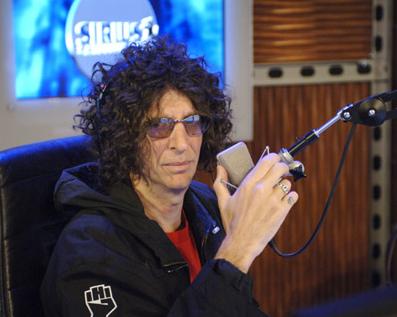
Howard Stern

"I don’t think there’s any difference between the pope wearing a large hat and parading around with a smoking purse and an African painting his face white and praying to a rock"


Britney Spears

“If you can’t have fun, why do what you’re doing? [But] my priorities have changed a little bit, too. My family, my God, and my boyfriend: That’s my life. … I don’t want to be scared. I can’t walk on pins and needles. So I just have to pray. I just have to pray every night.”


Mr. T

"[My father] was praying. He was getting the sermon ready for Sunday. He wasn’t beating my mother or drinking, he was praying. And that’s something special. He taught me to pray. He taught me to have faith…”


Jim Carrey


“We’ve always tried to humanize him in some way. He’s probably just a shaft of light in a doorway or something like that…”


Johnny Cash


"How well I have learned that there is no fence to sit on between heaven and hell. There is a deep, wide gulf, a chasm, and in that chasm is no place for any man."


Bono

“I often wonder if religion is the enemy of God. It’s almost like religion is what happens when the Spirit has left the building. God’s Spirit moves through us at a pace that can never be constricted by any one religious paradigm.”


Pamela Anderson


“Well, I believe in God. I definitely believe that He is the reason that I’ve gotten through everything that I have. And I go to church. My kids go to Sunday school. And it’s definitely a part of my life.”


Marilyn Manson


“Initially I was drawn to the darker side of life. But it’s
really just human nature. I started to learn that everything that’s considered a sin is what makes you a human being. All the seven deadly sins are man’s true nature.”


Alice Cooper


“My life is dedicated to follow Christ.”


How informed do you suppose Jim Carrey's view on God is?

What do you suppose motivates Howard Stern's view on religion? Is it accurate?


Is Britney Spears' expression of faith legitimate or reasonable considering how she's lived her life in the public eye? How about Pamela Anderson's or Bono's?


Finally, consider Marilyn Manson's statement. Is it accurate?


The key verse for this study is Romans 12:2:

    "And do not be conformed to this world, but be transformed by the renewing of your mind..."

There's four words that we need to focus on:

1. Conform - to "fashion oneself according to" or to "make yourself look like"

2. World - an "age". Not just any period of time, but a specific era. (Think the "60's" or the "80's")

3. Transform - Literally to "metamorphose". The word means simply, "change". As it is used in the New Teastament, it means a transformation from the inside-out. (Many thanks to Ron for pointing that out to me...)

4. Renewing - Being made new in a "fresh" sense, not a young sense.

Thus, Paul is essentially telling his "brethren" (cf. Romans 12:1):
"Do not adopt the popular ideas of the age. Rather be changed by the freshness of your mind."

God is constantly at work in the Christian. There is never a day that He's not pointing out something that needs work, showing someone who needs compassion, etc. It's those convictions that renew the Christian mind - it's what keeps the Christian "fresh". It's also known as the process of sanctification. It's a process that repeats itself as often as necessary and it's a process that cannot be overlooked.

Why?

Because if a Christian ceases to act upon their convictions, they get stale. When they get stale, God doesn't seem to work in their lives, their relationship with Him suffers, and eventually they may go looking elsewhere (i.e. to the popular social and political ideas of the current age) for guidance.

And from what I can see, the current age doesn't offer much for guidance...

Have a great week.

- Graffy